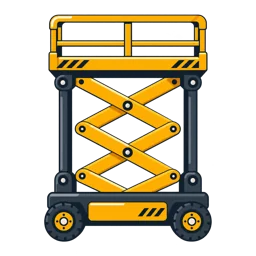
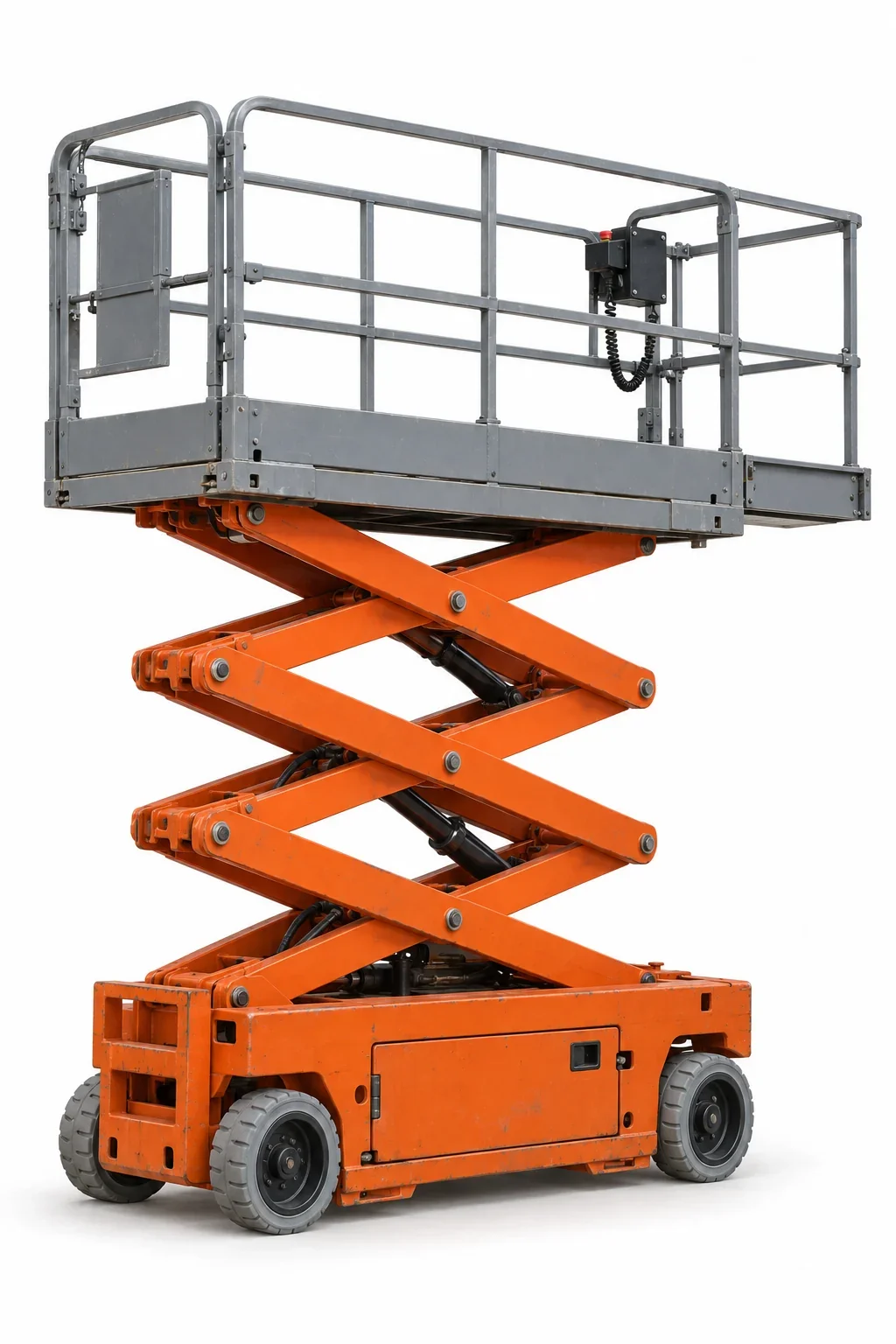
Geometry first: can the platform sit under the task?
Electric slab scissor lifts travel straight up. If the job sits directly overhead—lighting, duct drops, sprinkler heads, signage—measure working height and confirm an unobstructed vertical path. If beams, conveyors, or mezzanines block the path, compare booms at /boom-lift-rental/.
Tulsa interior patterns that affect the choice
- High-bay spaces and hangar-scale interiors introduce tall reaches but demand quiet, low-emission machines.
- Aisles and staging lanes vary; narrow-chassis models reduce disruption around racking and tooling.
- Door height and freight elevators can be the pinch point; check rail height and folded dimensions.
Platform capacity and deck configuration
Look at total rated load for people, tools, and materials. Extension decks help reach over work zones without moving the base. Wider platforms support panel work and fixture setting common in tenant improvements and facility maintenance.
Floor loading and finish concerns
Smooth slab floors favor electric units with non-marking tires. Where floors have coatings or sensitive finishes, ground pressure and tire composition affect suitability. Verify slab thickness and loading near edges, pits, or utility chases.
When electric scissor isn’t enough
- Up-and-over tasks: Articulating booms at /aerial-lift-rental/ provide clearance around obstacles.
- Long exterior travel or uneven ground: Rough-terrain scissors at /rough-terrain-scissor-lift-rental/ handle unfinished surfaces better.
Seasonal considerations in Tulsa
Exterior doors may be propped open during hot, humid periods, inviting dust and moisture inside. Choose units with protection suited for indoor use and plan for tighter maneuvering around temporary barriers and fans.